

 contact@tapestodigital.co.uk
 Too busy?
 Back
Back

 What customers say


.png?width=32&height=32&name=laser%20disc%20(1).png)


.png?width=32&height=32&name=Microcassette%20(1).png)


 Digital Services

.webp)
.png)

.png)

%20(70).png)
%20(67)-min.png)
%20(71).png)
%20(1126%20x%20658%20px)%20(480%20x%20448%20px)%20(6).webp)









The ability to freeze a moment in time and replay it at will is a relatively modern luxury. For decades, the "magnetic hum" and the "plastic click" of a cassette being pushed into a player were the ambient sounds of British living rooms. From the early days of bulky reel-to-reel machines to the sleek smartphones in our pockets today, home recording technology has undergone a radical transformation. Understanding this history is not just a lesson in engineering; it is a look at how we have documented our lives, our families, and our culture.
The Dawn of Magnetic Tape: Capturing Life in Analog
Before the 1970s, capturing moving images was a pursuit reserved for the wealthy or the professional, often involving expensive 8mm or Super 8 film. However, the introduction of magnetic tape changed everything. Unlike film, which required chemical processing and a projector, magnetic tape allowed for "instant" playback.
In the UK, the early 1970s saw the arrival of the first domestic video recorders. These machines were massive, often the size of a suitcase, and relied on a complex system of spinning heads to read electromagnetic signals on a plastic ribbon. While the quality was grainy by today’s standards, the magic of seeing oneself on a television screen was revolutionary. This era birthed a new hobby: the home movie. If you still possess these early relics, it is vital to understand VHS tape preservation tips before digitising to ensure the magnetic particles haven't shed from the backing.
The Format Wars: VHS vs. Betamax
Perhaps no era in recording history is as famous as the "Format War" of the late 70s and early 80s. JVC’s VHS (Video Home System) and Sony’s Betamax fought for dominance in UK households. While tech enthusiasts often argued that Betamax offered superior picture quality, VHS eventually won the war due to longer recording times and more affordable hardware.
This victory turned the VHS tape into a cultural icon. It became the standard for recording "Top of the Pops" on a Thursday night or filming a child’s first steps. However, as any enthusiast knows, these tapes were never meant to last forever. The physical tape is prone to stretching and mould, making transfer VHS to digital a race against time.
The Camcorder Revolution: Portability and Personal Memories
As the 1980s progressed into the 90s, the technology shrank. The "Camcorder" (a portmanteau of Camera and Recorder) allowed families to take their recording gear on holiday or to school plays. We saw the rise of smaller tape formats like VHS-C, Hi8, and eventually MiniDV.
MiniDV was a significant milestone because it represented the bridge between the analog and digital worlds. While it still used a physical tape, the data recorded was digital, offering much higher resolution. For many, these tapes now sit in shoeboxes in the loft, containing priceless footage that is currently inaccessible. Learning how MiniDV tapes can be converted to digital is the first step in bringing those "lost" 90s memories back to life on modern 4K screens.
The Digital Shift: Optical Media and the Rise of the DVD
By the late 1990s, the "winding" of tapes began to feel antiquated. The world was moving toward random-access media. The DVD (Digital Versatile Disc) offered a leap in convenience. You could skip to a specific scene instantly, and the discs didn't "wear out" with every play like magnetic tape did.
For a long time, the VHS to DVD conversion was the gold standard for preservation. It felt permanent. However, as technology continued to evolve, even the DVD began to face obsolescence. Laptops stopped shipping with disc drives, and the fragility of a scratched disc became a new concern for archivists.
Modern Preservation: Why MP4 and USB are the Future
Today, we have entered the age of "File-Based" media. The most flexible way to store history is no longer on a physical object like a disc, but as a high-quality data file. The MP4 format has become the universal language of video. It is compressed enough to share via WhatsApp or email, yet high-quality enough to look great on a large television.
Storing these files on a USB stick or a cloud drive ensures that your memories are portable and easily backed up. When choosing the right digital format: USB, MP4, or DVD, most experts now recommend the MP4 on a USB drive for its longevity and ease of use across all modern devices, from tablets to smart TVs.
The Risks of Degradation: Why History Can’t Wait
The primary enemy of home recording technology is "Remanence Decay." Magnetic tapes are essentially rust (iron oxide) glued to plastic. Over time, the glue fails (sticky-shed syndrome), the plastic becomes brittle, and the magnetic signal fades. In the damp UK climate, mould is a frequent visitor to tapes stored in garages or lofts.
Every year that passes without digitisation results in a slight loss of quality. This isn't just about the video; it applies to audio too. Whether it is a cassette of a grandparent's voice or a vinyl record of a local band, why now is the time to convert audio tapes to digital cannot be overstated. Once the signal is gone, it is gone forever.
Professional Digitisation: Saving Your Legacy
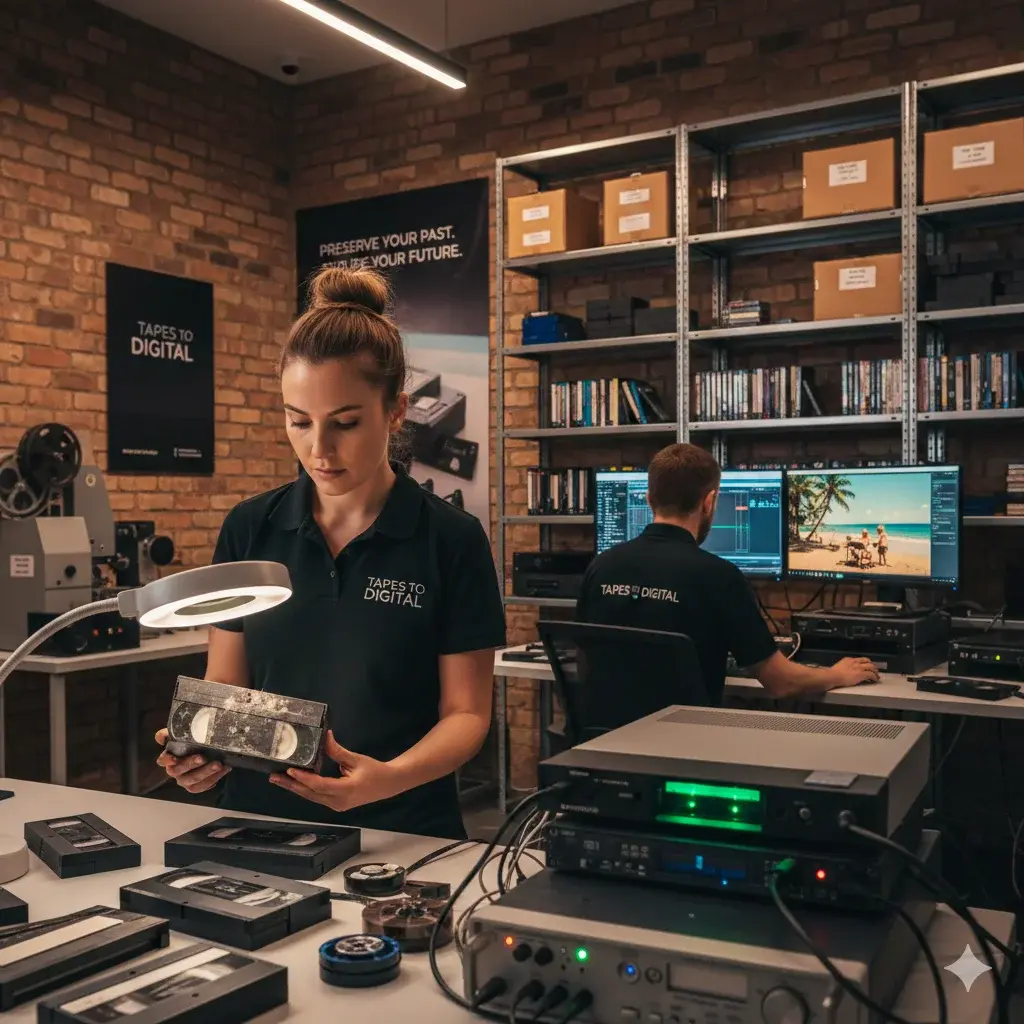
While DIY kits exist, the risks of using aged equipment on fragile tapes are high. A "chewing" of the tape in a dusty VCR can destroy the only copy of a wedding or a christening. Professional services use broadcast-grade equipment and time-base correctors to stabilise shaky footage and restore vibrant colours.
At Tapes to Digital, we provide expert care for your family's history. From our locations in Watford to Leeds, we ensure that the transition from the analog past to the digital future is seamless and safe.
Why Choose Us
We treat every parcel with the respect a family heirloom deserves. Our process is transparent, and our technology is state-of-the-art, ensuring your memories are preserved for the next century.
About Us
Tapes to Digital is a leading UK provider of media conversion. We specialise in turning "obsolete" formats into vibrant digital files, helping families across the country reconnect with their past.