

 contact@tapestodigital.co.uk
 Too busy?
 Back
Back

 What customers say


.png?width=32&height=32&name=laser%20disc%20(1).png)


.png?width=32&height=32&name=Microcassette%20(1).png)


 Digital Services

.webp)
.png)

.png)

%20(70).png)
%20(67)-min.png)
%20(71).png)
%20(1126%20x%20658%20px)%20(480%20x%20448%20px)%20(6).webp)













The Silent Threat: Understanding Mold on Audio Tapes
For many in the UK, boxes of old cassette tapes and reel-to-reel recordings are tucked away in lofts, garages, or basements. While these spaces are convenient, they are often prone to fluctuating temperatures and dampness—the perfect breeding ground for mold. Mold on audio tapes isn't just a cosmetic issue; it is a biological threat that consumes the organic binders holding the magnetic particles to the tape base.
When you decide it is time to revisit those memories, the first step is a visual inspection. If you notice a white, fuzzy residue or a pungent, musty smell, you are likely dealing with an active or dormant fungal infestation. Ignoring this can lead to the tape snapping or the "shedding" of the magnetic layer during playback, resulting in the total loss of the audio. This is a primary reason why now is the time to convert audio tapes to digital before the damage becomes irreversible.
How to Identify Mold and Fungal Growth
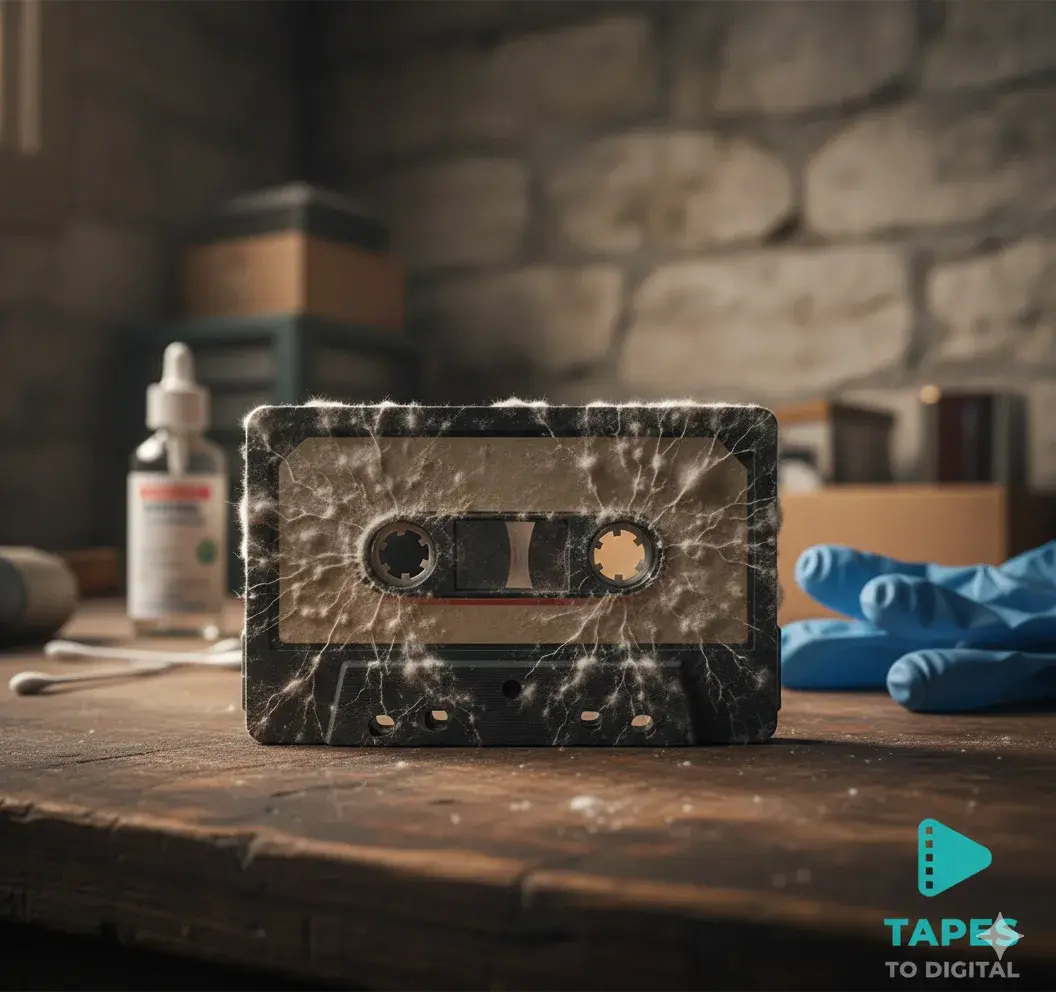
Identifying mold early is crucial for successful restoration. Unlike dust, which sits loosely on the surface, mold often appears as white or off-white spots that seem to "bloom" from the edges of the tape pack. In advanced stages, it can look like a thick, velvety coating.
Look for these specific signs:
-
White Spidery Veins: Often seen through the clear plastic windows of a cassette.
-
The Musty Odour: A distinct "old library" or damp cellar smell.
-
Sticking: If the tape feels "tacky" or resists spooling, mold binders may be acting like glue.
If you find mold, do not attempt to play the tape in your home deck. The spores can easily transfer to the playback heads and rollers, contaminating every other tape you play afterward. Instead, seek a professional video conversion service that has the specific equipment to handle contaminated media safely.
The Science of Decay: Why Mold Loves Magnetic Tape
Magnetic tapes are composed of several layers: a base (usually polyester or acetate), a magnetic oxide layer, and a binder that holds them together. This binder often contains organic compounds, such as polyurethane, which fungi find quite "nutritious." When humidity levels in a UK home exceed 60%, these spores activate and begin to digest the binder.
As the binder breaks down, the tape enters a state known as "Sticky Shed Syndrome." In this condition, the magnetic material literally peels off the plastic backing. If you try to run such a tape through a machine, the friction and heat can cause the oxide to smear across the heads, permanently destroying the recording. Understanding how to choose the right VHS to digital service in UK is equally applicable here, as you need experts who understand the chemistry of tape decay.
The Dangers of DIY Mold Removal
It is tempting to grab a cotton bud and some isopropyl alcohol to "wipe away" the mold. However, the danger of DIY options for digitising VHS tapes and audio cassettes cannot be overstated. Standard cleaning agents can be too abrasive, or they may react with the already weakened binder, causing the tape to dissolve or become even stickier.
Furthermore, inhaling mold spores is a health hazard. Professional labs use HEPA-filtered vacuum systems and specialised cleaning machines that physically remove the spores without spreading them into the air or deeper into the tape layers. DIY attempts often just push the mold further into the reel, leading to a "re-bloom" a few weeks later.
Professional Restoration and Digitisation
When you send a moldy tape to a professional, the process is meticulous. It begins with a decontamination phase, where the tape is cleaned using non-liquid, mechanical processes to remove the bulk of the fungal growth. In some cases, "baking" the tape in a controlled laboratory oven is necessary to temporarily stabilise the binder, allowing for one final, clean pass for digitisation.
Once the tape is stabilised, it is played back on high-end calibrated decks. This ensures that the resulting digital file—whether you choose USB, MP4, or DVD—is of the highest possible fidelity. For most customers, VHS to MP4 is the preferred route for audio as well, providing a versatile file that can be backed up to the cloud.
Preventing Future Growth: Proper Storage Tips
If you have tapes that haven't been affected yet, prevention is your best strategy. The UK climate is notoriously damp, so avoid storing your precious recordings in the following locations:
-
The Loft: Excessive heat in the summer and cold in the winter causes the tape to expand and contract, weakening the binder.
-
The Garage or Basement: These are high-humidity zones where mold thrives.
-
Against Outside Walls: Condensation often forms behind furniture on exterior-facing walls.
Store your tapes vertically (like books) in a cool, dry, and dark cupboard. Use airtight plastic bins with silica gel packets to absorb any lingering moisture. However, remember that no physical storage is permanent. The most reliable way to preserve the sounds of the past is to transfer VHS to digital and audio tapes to modern formats.
Why Choose Tapes to Digital?
We treat every cassette and reel as a unique piece of history. Our specialists are trained in handling delicate and contaminated media, ensuring that your family’s voices and music are captured before they fade away. From Watford to Leeds, we provide professional care for every parcel we receive.
About Us
Tapes to Digital is a leading UK provider of high-quality digitisation services. We specialise in converting outdated formats into future-proof digital files, using industry-standard equipment and restoration techniques.