

 contact@tapestodigital.co.uk
 Too busy?
 Back
Back

 What customers say


.png?width=32&height=32&name=laser%20disc%20(1).png)


.png?width=32&height=32&name=Microcassette%20(1).png)


 Digital Services

.webp)
.png)

.png)

%20(70).png)
%20(67)-min.png)
%20(71).png)
%20(1126%20x%20658%20px)%20(480%20x%20448%20px)%20(6).webp)














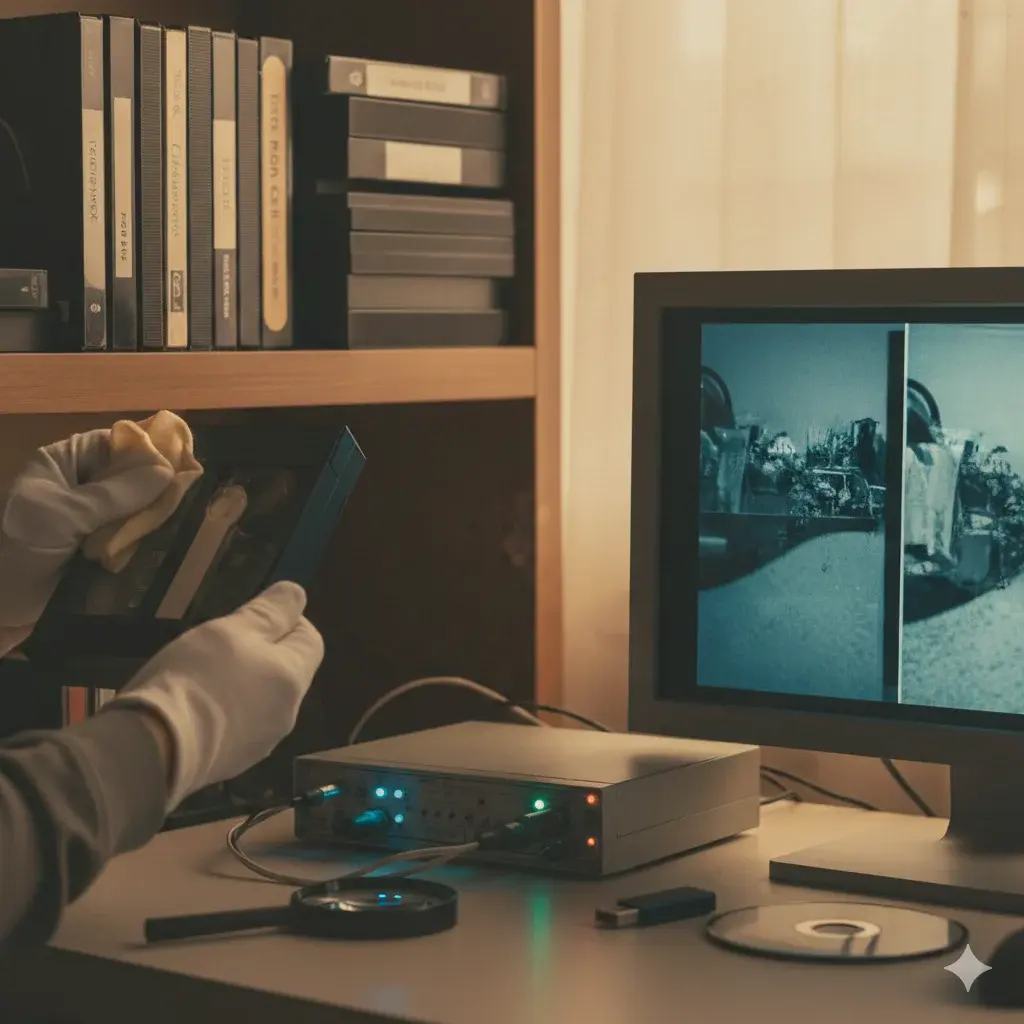
The magnetic hum of a VCR and the plastic click of the cassette are sounds that defined a generation of home filmmaking. However, beneath those sturdy plastic shells, your memories are stored on thin strips of polyester coated in chromium dioxide or ferric oxide—materials that are unfortunately prone to physical and chemical decay. If you are planning to transfer VHS to digital, the condition of your physical tapes will directly dictate the quality of the final digital file.
The Fragility of Magnetic Media
Analog tapes were never meant to last forever. They suffer from a phenomenon known as "binder hydrolysis" or "sticky shed syndrome," where the binders that hold the magnetic particles to the tape base begin to absorb moisture. This results in a sticky residue that can clog video heads and cause the tape to tear during playback. Before you even think about putting a decades-old tape into a player, you must assess its health. Choosing a professional VHS service is often the safest route because experts have the equipment to handle delicate or damaged ribbons without causing further degradation.
Environmental Factors: The Enemies of Analog Tape
The British climate, with its varying humidity levels, can be particularly harsh on magnetic media stored in lofts or garages. To preserve your tapes before they reach the digitisation suite, you must control the environment.
Temperature and Humidity Control
Ideally, VHS tapes should be stored in a cool, dry place. Excessive heat causes the tape to become brittle, while high humidity encourages the growth of mould. If you see white, fuzzy spots through the clear plastic window of your cassette, do not attempt to play it. Playing a mouldy tape can spread spores to your VCR and ruin the internal components. For those with extensive collections, understanding VHS preservation and tape care is the first step in a successful archiving project.
Magnetic Interference
Tapes store information via magnetic particles. Therefore, keeping them away from speakers, old television sets, or large motors is crucial. Even a small magnetic field can cause "ghosting" or permanent data loss over several years. While you may be looking for the best VHS format to convert to, the raw data on the tape must remain intact for any digital enhancement to be effective.
Physical Inspection and Tape Cleaning
Before sending your parcels to a conversion centre, perform a visual audit of your collection. Look for cracked casings or loose tape reels. If a tape is slack, you can carefully use a pencil or a dedicated winding tool to tighten the spool.
Dealing with Mould and Dust
Dust acts as an abrasive. When a dusty tape passes over a playback head, it can scratch the magnetic coating. For light dust, a lint-free cloth can be used on the exterior of the case. However, internal cleaning should be left to professionals. Attempting a DIY clean often leads to "creasing" the tape, which results in permanent horizontal lines (tracking errors) across your digital video. This is one of the many dangers of DIY options for digitising VHS tapes.
Why Handling and Storage Matter Most
The way you store your tapes on the shelf impacts their longevity. Tapes should always be stored vertically, like books on a library shelf. Storing them flat (horizontally) causes the tape edges to sag and curl under their own weight, leading to poor signal-to-noise ratios.
The Importance of the Protective Case
Always keep your tapes in their original "sleeve" or a hard plastic case. This protects the tape from accidental sunlight exposure, which can "bleach" the magnetic information. If you are dealing with smaller formats like VHS-C to digital, the same rules apply; these smaller camcorder tapes are even more sensitive to mechanical stress due to their compact internal gears.
Preparing for the Professional Transfer
Once you have cleaned the exteriors and organised your collection, you need to decide on your output. While some prefer a VHS to DVD approach for a physical backup, most modern users opt for MP4 files on a USB stick for easy sharing and cloud storage.
Choosing the Right Service
When looking for a provider in the UK, consider their track record and physical locations. Whether you are searching for a service in Watford or Bromley, ensure they use professional-grade time-base correctors (TBCs) to stabilise the image. High-quality conversion isn't just about recording the screen; it involves enhancing digitised tapes through colour correction and noise reduction to make your old footage look better than ever.
Why Choose Us
At Tapes to Digital, we treat every cassette as a piece of history. Our technicians are experts in handling delicate media, ensuring that your memories are preserved with the highest fidelity. We offer transparent communication and professional care throughout the process.
FAQ
1. Can mouldy VHS tapes be saved? Yes, but they require professional decontamination. Never put a mouldy tape in your home VCR as it will contaminate the machine and other tapes.
2. How long do VHS tapes actually last? Under average UK home conditions, tapes begin to show significant degradation after 15 to 25 years. Magnetic signal loss is inevitable without digitisation.
3. What is the best format for my digital copies? MP4 is generally recommended for its compatibility with smart TVs, tablets, and computers. However, we also offer conversion to USB and DVD.
4. Should I rewind my tapes before sending them? It is helpful, but not strictly necessary. Professional services will ensure the tape is properly tensioned and wound before starting the capture process.
5. Is DIY conversion as good as professional service? Usually not. DIY kits often lack the professional-grade stabilisers (TBCs) needed to fix "jitter" and tracking issues common in aging tapes.